Paper Bowl vs Styrofoam: Why Are F&B Businesses Switching?
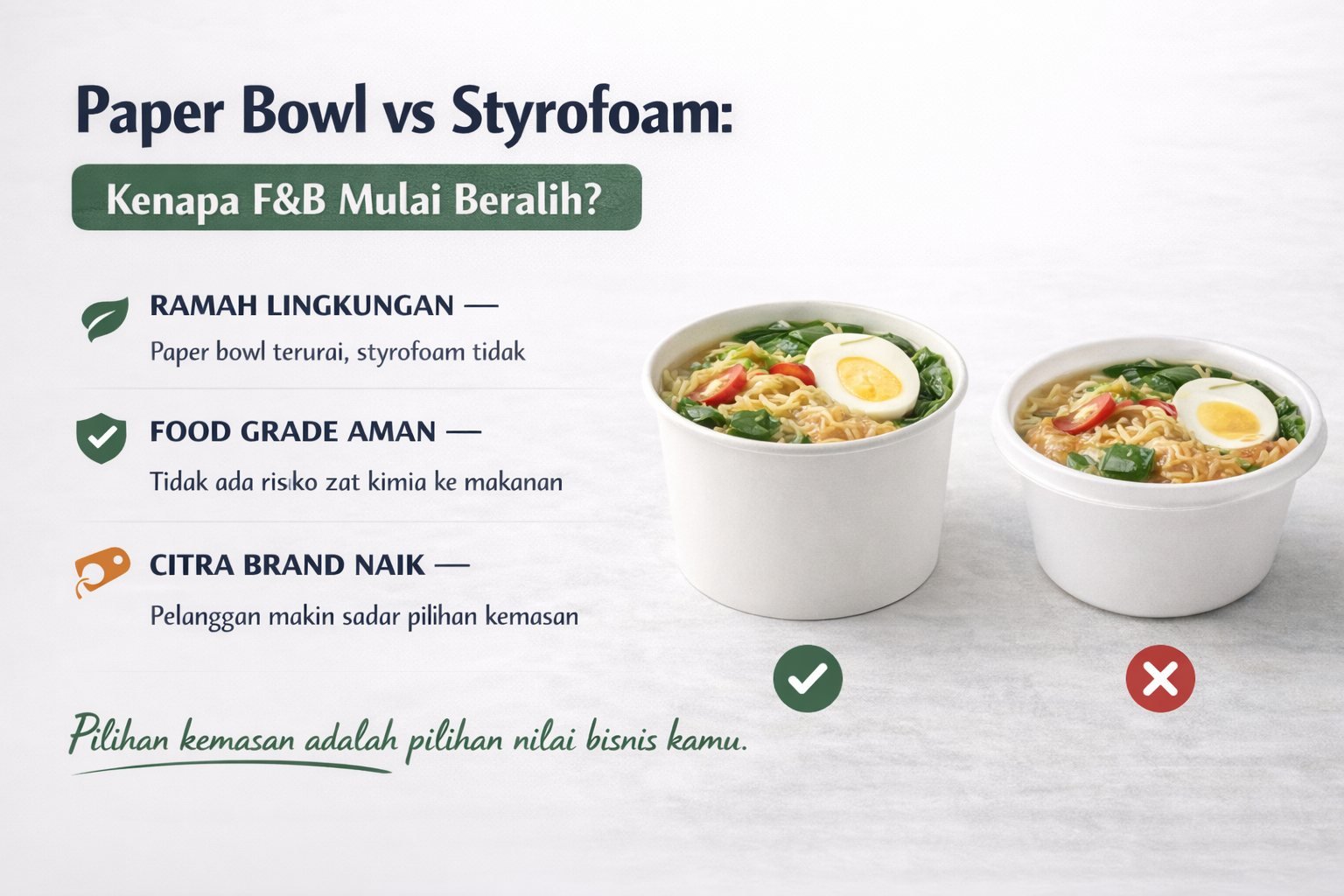
Why Is the "Paper Bowl vs Styrofoam" Question Coming Up More Often?
For a long time, styrofoam has been the default choice for many warungs and food businesses because it's the cheapest and lightest option. But customer perceptions are changing fast — especially for hot and soupy food (see also how to choose food-safe packaging).
Some customers now actively avoid styrofoam, and several regions in Indonesia have even issued rules restricting its use. For F&B businesses, this isn't just a matter of taste, it's about trust and business readiness.
- Some customers hesitate to eat hot food from foam containers
- It dents and leaks easily when holding hot, oily soup
- It's hard to look professional — difficult to print with a logo & branding
- Several regions have already restricted its use through regulation
3 Angles for Comparing Food-Grade Paper Bowls vs Styrofoam
To be fair, let's compare the two from the angles that matter most to an F&B business — not just the price per pcs. A quick table version of similar comparisons is also available on our paper lunch box vs styrofoam and paper bowl vs plastic bowl pages.
Food-grade paper bowls are made from paper designed specifically as food containers, with a protective lining inside. Styrofoam can still be used, but many customers today feel more at ease receiving hot food in paper packaging. This perception is real and directly affects whether they order again.
Styrofoam struggles to look premium and is almost impossible to print a logo on neatly. Paper bowls can be custom printed with your brand name, logo and signature colors — turning ordinary packaging into a promotional medium. In an era where people photograph their food before eating, the difference is obvious.
Styrofoam is light and retains heat, but it can soften when it comes into contact with very hot, oily food. Food-grade paper bowls with a protective lining hold up to hot soup and oil as long as they aren't filled to the brim. On the environmental side, paper-based packaging is also more readily accepted by the market and better prepared for increasingly strict regulations.
Switching to paper bowls isn't just about changing containers — it's about raising customer trust and your brand image without changing the taste of your cooking one bit.
How Does SEALPAK Help You Switch to Paper Bowls?
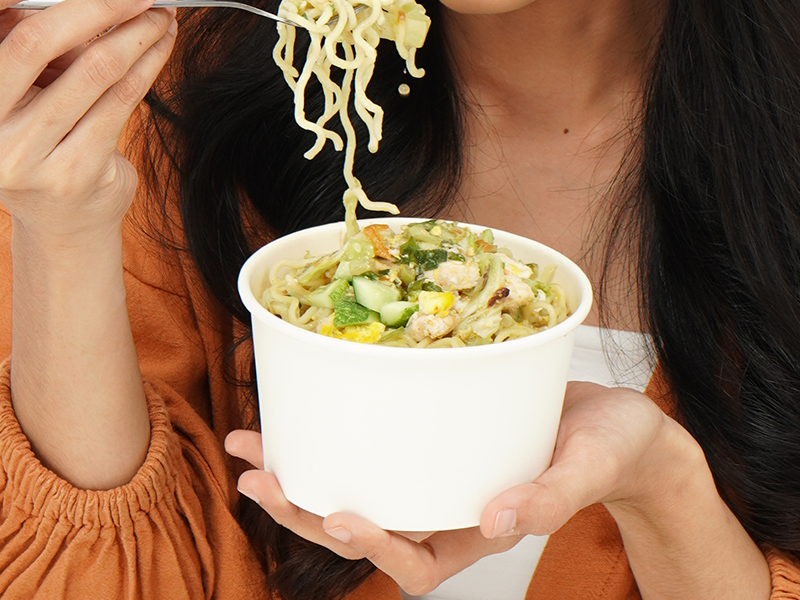
SEALPAK offers food-grade paper bowls whose paper raw material is FDA and Halal certified, with a protective lining inside to resist soup and oil, and microwave safe up to 100°C for 1 minute. Several sizes are available, so you can match the capacity to your menu — from soup, noodles and bakso to desserts.
Want to look more professional? All products are available plain or custom printed — print your logo and brand colors right on the packaging. For dishes without soup, there's also the Paper Lunch Box for nasi box meals, and Custom Packaging if you want a packaging shape that truly fits your business concept.
- Filling paper bowls to the brim for soupy dishes — the lid won't close tightly and spills easily
- Choosing a size that doesn't match the menu portion — the food shifts around and looks messy
- Switching without making use of custom print right away — missing out on free branding with every order
Frequently Asked Questions
Related Products
Styrofoam Alternatives from SEALPAK
Available plain or custom printed. Suitable for small businesses through to large-scale manufacturers.
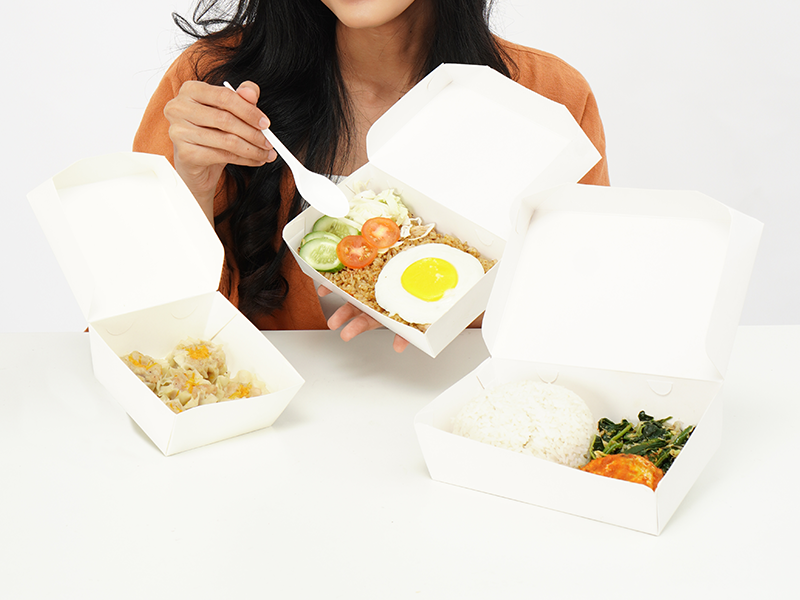
Paper Lunch Box
One box, a thousand possibilities. For nasi box (rice box meals) & single-item menus.
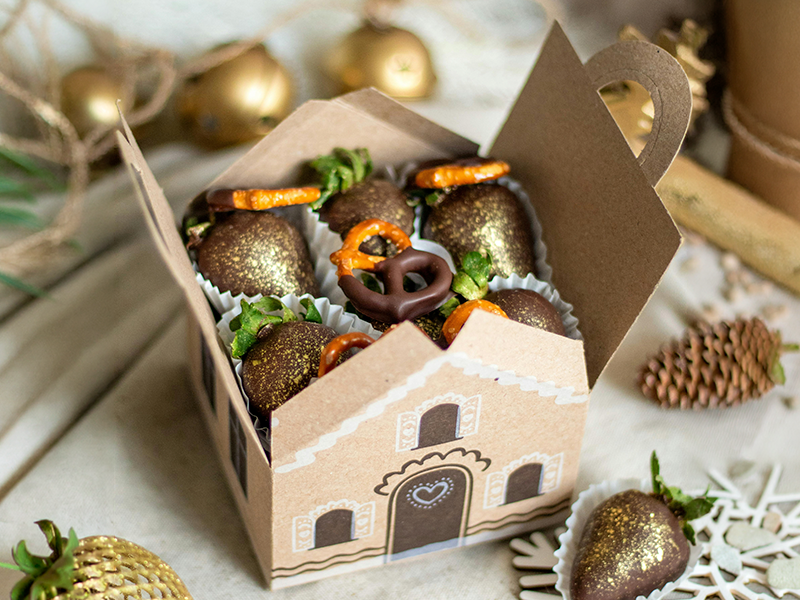 Custom
Custom Packaging
From softboxes and gable boxes to sleeve+tray — made to your specifications.