How to Choose the Right Food Safe Packaging for Your F&B Business
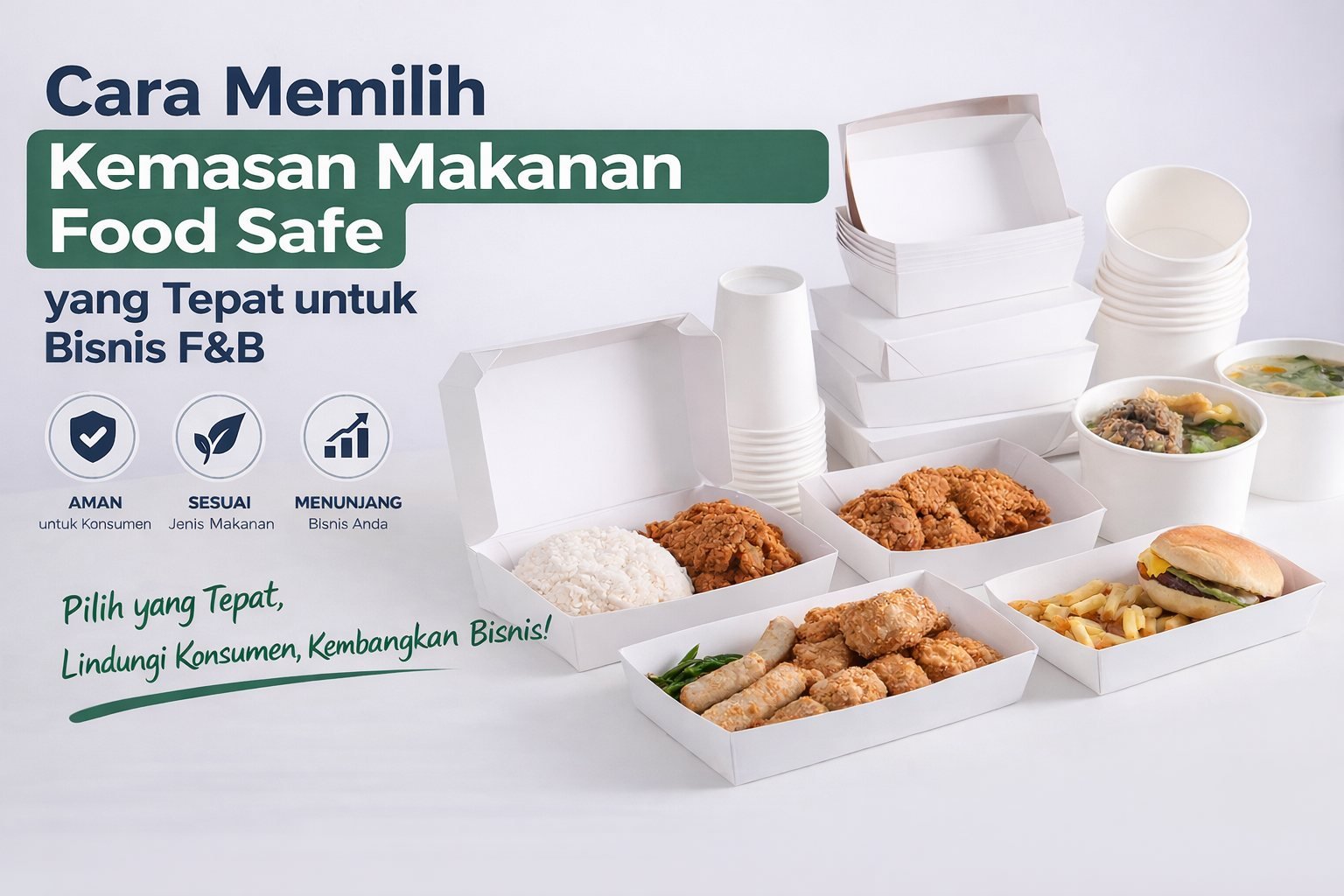
As a food safe packaging supplier in Jakarta, SEALPAK often hears the same question from F&B business owners: "Which packaging is right for my product?" The answer isn't as simple as picking the cheapest or the best-looking option.
For many business owners — from home kitchens to cloud kitchens — packaging is often seen as the last thing to think about. Yet packaging is the first thing customers touch, see and judge before they eat your product.
In this article, we cover 4 important factors you should consider when choosing food packaging that's genuinely food safe — not just the cheapest on the market.
What Is Food Safe Packaging?
Food safe packaging is packaging that is safe in direct contact with food — it contains no harmful substances, doesn't change the taste or smell, and is produced and used according to applicable food safety standards.
Before getting into the selection criteria, it's important to understand the difference between food grade and food safe.
Food grade refers to the raw material standard — meaning the material is permitted by regulation to come into contact with food. Food safe is a broader standard: the packaging doesn't just use the right materials, it's also produced, stored and used in a way that's genuinely safe.
At SEALPAK, we work to the food safe standard because it covers the whole production chain — from choosing the paper raw material to the PE coating. Our paper raw materials are FDA and Halal certified, so you can focus on your business without worrying about packaging safety.
Good food safe packaging has these traits: it doesn't change the taste or smell of the food, it contains no harmful substances such as BPA or heavy metals, and it holds up under real-world conditions (heat, moisture, oil).
4 Important Factors When Choosing Food Packaging
Many F&B businesses buy packaging based only on price or appearance — without considering whether it truly suits their product and operations. The following four factors will help you make a better decision.
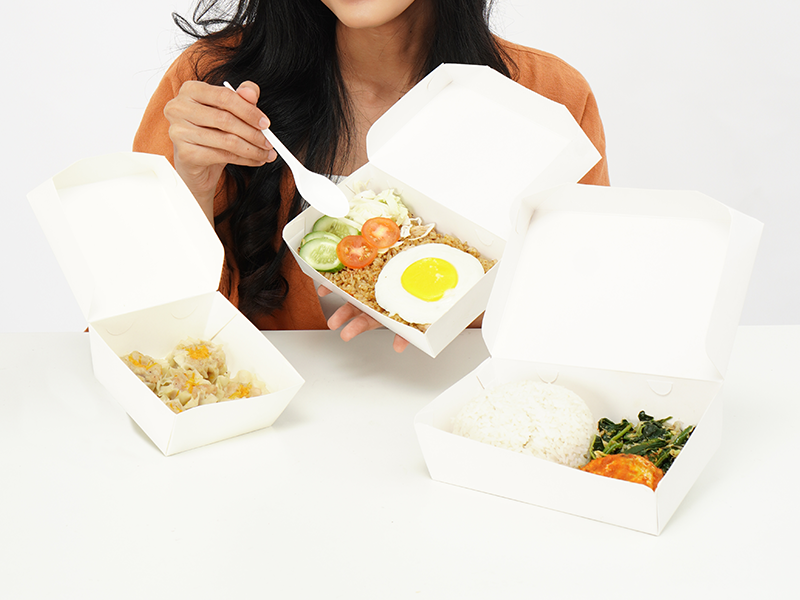
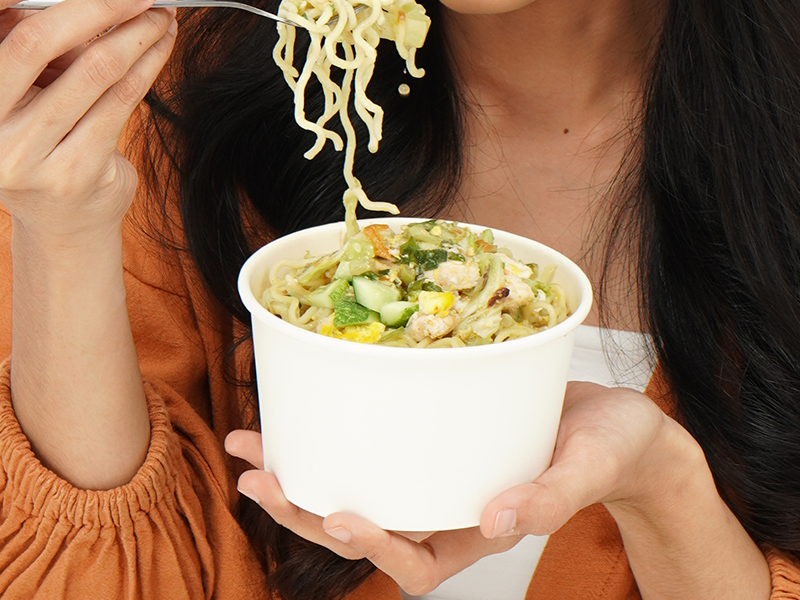
Not every packaging suits every food. Soupy food needs packaging with a leak-proof lining. Oily food like fried chicken or fried snacks needs grease-resistant packaging. Dry food is more flexible, but still needs packaging that keeps it crispy.
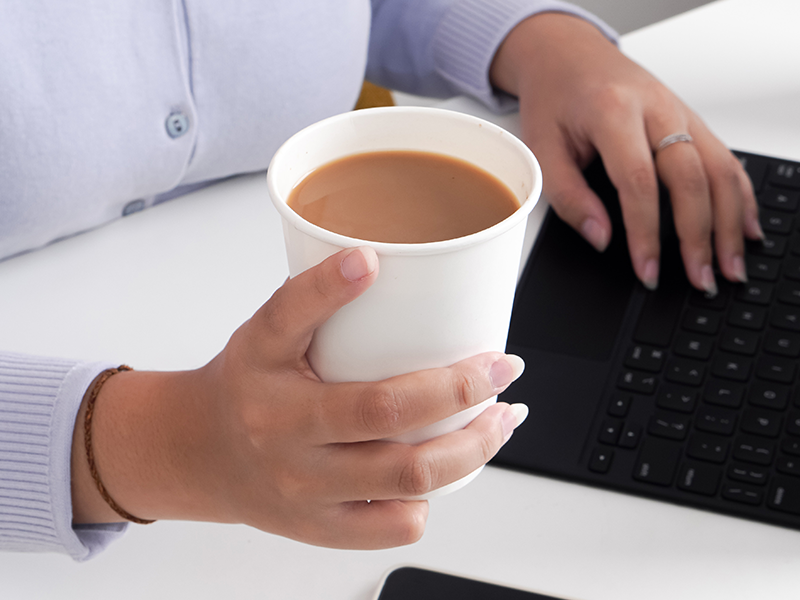
Paper weight (GSM) determines how strong your packaging is. A lunch box that's too thin will dent when stacked. A paper cup that isn't rigid enough will crumple when held. Don't just look at the price — look at the material specifications and try it yourself before ordering in large quantities.
A delivery business needs packaging that's leakproof and shock resistant. A dine-in business can focus more on looks. A business with mass production needs packaging that's dimensionally consistent so it can run on an automated packing line. Packaging that works well in one context can be a problem in another.
Plain packaging is cheaper at first, but custom printed packaging works as free marketing with every delivery. For businesses that already have a clear brand, upgrading to custom print is an investment that pays back quickly — especially in the GrabFood and GoFood era, where packaging is the only physical touchpoint with the customer.
Common Mistakes to Avoid
Many F&B businesses make packaging decisions that look economical at first but end up expensive later on. Recognise these patterns before you fall into the same trap.
- Choosing on price alone — cheap packaging that leaks or breaks costs far more in the long run (customer complaints, refunds, reputation).
- Not testing real-use conditions — packaging that looks great in photos can fail completely once it's filled with hot food and placed in a delivery bag for 20 minutes.
- Getting the size wrong — a lunch box that's too big makes the portion look small; too small and the food won't fit neatly.
- Not checking raw material certification — make sure your supplier can show proof that the materials used are certified food safe. FDA and Halal certified paper is the minimum standard you should ask about.
- Placing a big order without a trial — always order a small quantity first and run a function test with your own menu before committing to a large MOQ.
Recommendations for Different Business Sizes
Home kitchens & new small businesses: Start with good-quality plain packaging. Focus on function — leakproof, heat resistant, the right size. Don't spend your budget on custom print before your orders are stable.
Established cafés, cloud kitchens and restaurants: This is the time to upgrade to custom print. Packaging is no longer just a container — it's a brand experience that physically reaches your customers. Start with one main product (for example a lunch box or paper cup) and then expand gradually.
Manufacturers and distributors: Prioritise supply consistency and dimensional stability. Look for a supplier that can guarantee stock availability and consistent quality from batch to batch — not just the price per unit (see also what to check with a food packaging supplier in Jakarta).
Conclusion
Choosing the right food safe packaging isn't about the lowest price — it's about the fit between the packaging, your product and your business operations. Make sure the packaging suits the type of food, is strong enough materially, supports your workflow, and can become a branding asset that works with every delivery. On top of that, always verify that your supplier's raw materials are certified — FDA and Halal at a minimum.
If you're still not sure which packaging is right, the SEALPAK team is ready to help — no pressure, no minimum chat.
Frequently Asked Questions
Related Products
Food Safe Packaging from SEALPAK
Available plain or custom printed. Suitable for small businesses through to large-scale manufacturers.
 Best Seller
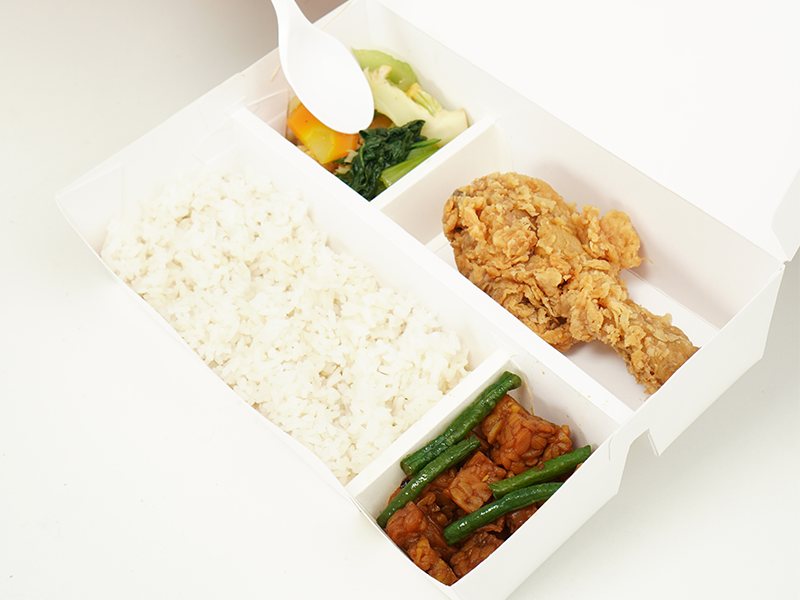
Lunchbox Compartment
Keep flavours apart, bring satisfaction together. Ideal for bento & premium catering.